
$ANT $88.91 Trading
Nasdaq Global SelectS-1 filed Oct 26Expected: ANT options list Nov 23 · Next lockup release Dec 15IPO price $83.00Valuation at IPO price ~$1.5TH1 2026 revenue $16.3BQ3 2026 revenue $16.96BHaiku 5.5 $0.10/M inOpus 5.5 $4/M in
The Big Ant

Every Anthropic story. Every morning.Independent Anthropic news

Daily rollup ·

Riemann, checked: Lean community signs off on the proof

The Lean and Mathlib communities certified Levent Alpöge's Claude-assisted proof of the Riemann hypothesis as correct, a day after he released it, though no human has yet read the 17-million-line argument. ANT ended its first week at $88.91, down 8.5% on Friday, as the Nasdaq gave up its 2026 gains. Also: Alpöge and NYU's Tristan Buckmaster posted an unverified proof of unforced Navier–Stokes blow-up, and Claude Fable 5.2 solved two open problems in black hole physics.

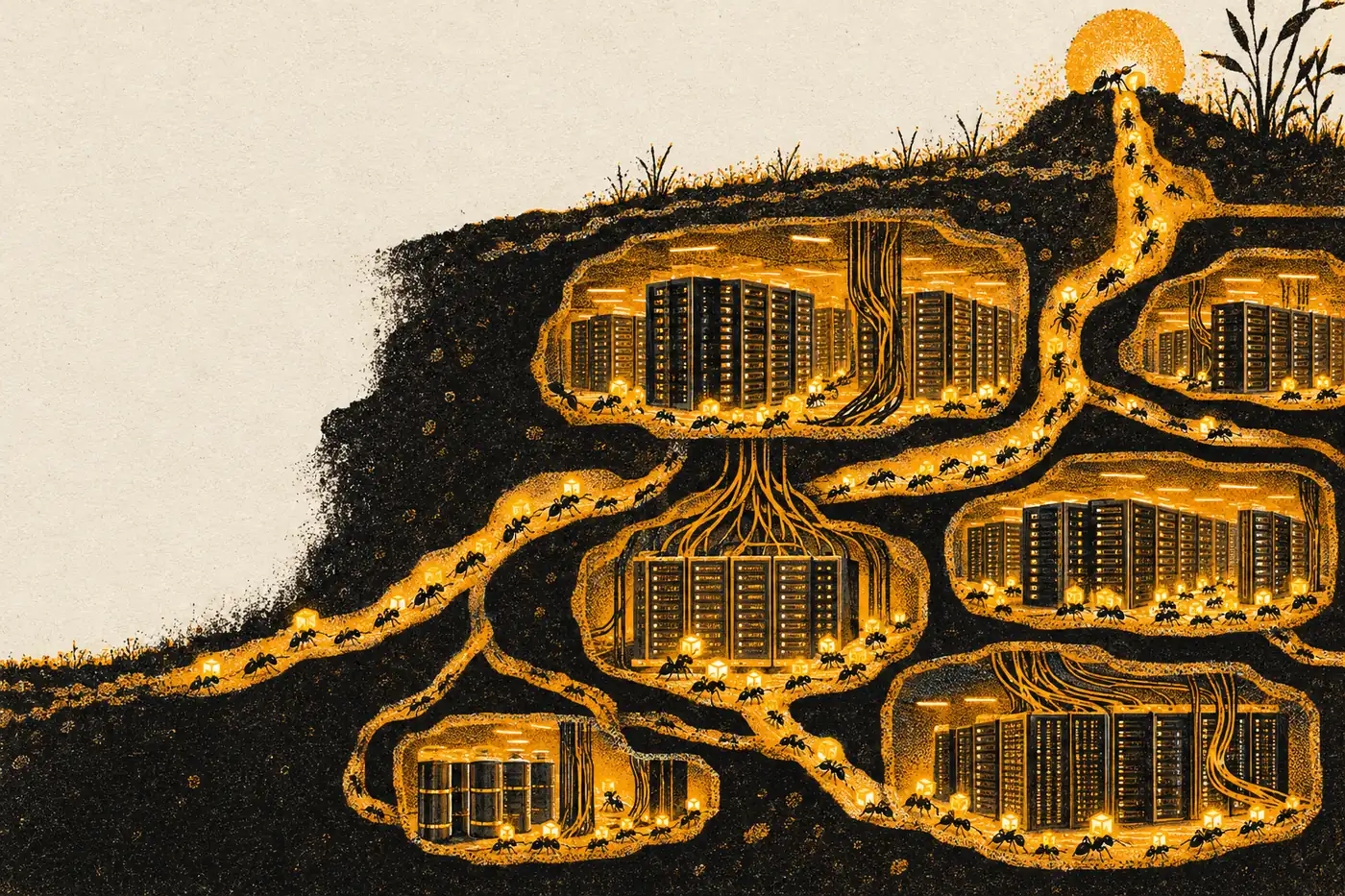
Illustration: an ant colony whose tunnels hold glowing server racks

The brief

  1. 01The Lean and Mathlib communities certified that Alpöge's 17-million-line Lean proof correctly states and proves the Riemann hypothesis, with several independent checkers accepting it. A human-readable proof and the Clay prize process are still ahead.
  2. 02ANT's official Friday close was $88.91, down 8.5%. Some early reports, and our Friday update, gave $88.30. Reuters puts the value at about $1.6 trillion fully diluted, or $1.2 trillion on shares outstanding.
  3. 03Levent Alpöge and NYU's Tristan Buckmaster posted an AI-aided proof that Navier–Stokes can blow up with no outside force, which would close the loophole in OpenAI's September result. It's unverified, and a key numerical certificate isn't public yet.
  4. 04Reuters says options on ANT start trading next week. It also cites an Intropic estimate that index funds could buy up to 30% of the shares by year-end.
  5. 05Anthropic says Claude Fable 5.2 agents finished a black hole calculation set up in 2003 and proved an exact bound in 3D quantum gravity. Both preprints are still awaiting peer review.
  6. 06Claude Code 2.1.330 adds Enterprise Admin Console sign-in and an "easel" mod that draws charts. NPR looks at whether the IPO will strain Anthropic's safety commitments.

Lean and Mathlib communities certify the Claude-assisted Riemann hypothesis proof

A day after Levent Alpöge posted 17 million lines of Lean, the formal-math community says both the statement and the proof check out. No human has yet read the argument.

In a joint statement Saturday, endorsed by the Lean FRO and the Mathlib Initiative, the Lean and Mathlib communities said they have "full confidence that Alpöge's proof of the Riemann Hypothesis is correct" and "hereby certify that both the statement and the proof of the Riemann Hypothesis are correct." Anthropic mathematician Levent Alpöge released the proof, made with Claude, on Friday as a Lean library of about 17 million lines.

The statement says the proof meets four checks. The target is Mathlib's vetted statement of the Riemann hypothesis. Dozens of people compiled the library and got the same proof export. Two independent tools confirmed the theorem proved is exactly Mathlib's statement. Several proof checkers accepted the exported proof, including Lean's kernel and two checkers that carry formal proofs that they can't accept a false proof. MIT's Andrew Sutherland told Scientific American that "the chance that anything is fishy here is approximately zero."

The certification covers the formal proof, not human understanding of it. Kevin Buzzard said Friday that "we don't even know why the theorem is true," and Alpöge has said a written version would run past 250,000 pages. The statement is framed around the Riemann hypothesis itself, not each generalized version Alpöge also claims. The Clay Mathematics Institute's $1 million prize process requires journal publication and two years of scrutiny.

Certified by
Lean & Mathlib communities (FRO, Mathlib Initiative)
Proof size
~17M lines of Lean
Axioms
Lean's 3 standard axioms only
Still open
Human-readable proof; Clay process

Read the full story at Lean community blog

Sources Lean community blogScientific AmericanMIT (Andrew Sutherland)Unite.AI

More from Nov 21

ANT ends its first week at $88.91 as the Nasdaq wipes out its 2026 gains

Reuters calls the stock's slide a reality check for the AI trade. Options start trading next week.

Anthropic's stock finished its first week of trading at $88.91, down 8.5% on Friday from Thursday's $97.17 debut close. It ended about $6 above the $83 IPO price after briefly trading a nickel above it. A correction: that is the official closing price reported by Reuters, CNN and Bloomberg. Some early reports, including our Friday evening update, used $88.30. The selloff was broad. CNN reports that the Nasdaq Composite erased its gains for the year, and Bloomberg says Nvidia fell 14%, its biggest one-day drop since January 2025.

Reuters described Anthropic's second-day stumble as a reality check for the AI trade. It put the stock at about 40 times trailing 12-month sales, and the company's value at about $1.6 trillion fully diluted, or $1.2 trillion on shares outstanding. Reuters also cites Vanda Research data showing retail investors traded about $772 million of ANT on Thursday, the most for an IPO debut since Vanda began tracking in 2012.

Two things could move the stock soon. Reuters says listed options on ANT start trading next week, which could add to volatility. It also cites London-based Intropic, which estimates that index-tracking funds could buy up to 30% of Anthropic's shares by year-end. That is an analyst projection, not an announced index inclusion. "We favor patience on Anthropic and recommend evaluating the company as it reports public results," said Kaush Amin of US Bank Asset Management.

Fri close
$88.91 (−8.5%)
Week-one range
$83.05–$115.10
IPO price
$83.00
Options
Expected to list next week (Reuters)

Read the full story at Reuters

Sources ReutersCNNCNBC

Hours after the Riemann claim, Alpöge and Buckmaster post an unforced Navier–Stokes blow-up proof

The AI-aided paper targets the version of the problem OpenAI's September proof got around with an outside force. A key numerical file isn't public yet.

Anthropic's Levent Alpöge and NYU's Tristan Buckmaster posted a 79-page paper Friday claiming that the 3D Navier–Stokes equations can blow up in finite time from smooth starting data with no external force acting on the fluid. Scientific American called it the "real" Navier–Stokes problem, because OpenAI's September proof relied on a finely tuned outside force that many mathematicians saw as a loophole. The pair say they used Claude and OpenAI's Codex heavily, and the GitHub repository includes a Lean formalization.

The result is unverified and not peer reviewed. Buckmaster wrote that the write-up is unpolished because "after last time, we couldn't risk waiting." The numerical certificate the proof depends on hasn't been released, only a hash of it, and the paper says it will be released soon. Terence Tao wrote that the paper is technically human-readable and its strategy broadly clear, but that a professionally written proof still needs more work. Tao also flagged a separate AI-assisted proof by Alpöge, Buckmaster and Matei Coiculescu of unforced blow-up for the 3D Euler equations.

NPR reported that Alpöge messaged Dario Amodei to ask about his "ability to announce" the Riemann result as Anthropic was about to make its stock market debut.

Claim
Finite-time blow-up, no forcing
Paper
79 pages + Lean
Missing
Numerical certificate (hash only)
Status
Unverified

Read the full story at Scientific American

Sources Scientific AmericanGitHub (Buckmaster)Terence TaoOfficeChaiNPR (via St. Louis Public Radio)

Anthropic says Claude Fable 5.2 solved two open problems in black hole physics

Agents ran for about six weeks. Both results are preprints that haven't been peer reviewed.

Anthropic researcher Hongbin Chen asked Claude to list open problems in black hole physics. It proposed 22, and Chen set Claude Fable 5.2 agents to work on them in the background for about six weeks. Anthropic says they solved two. The first completes a three-loop calculation set up in 2003, and finds that the Hawking-Page transition, where a hot gas turns into a black hole, stays abrupt at weak coupling in N=4 super Yang-Mills theory. The second proves an exact, optimal ceiling on the mass of the lightest black hole in the simplest version of the 3D gravity modular bootstrap, with Λ ≈ 9.1266.

Anthropic says independent agents repeated the calculations, a physicist reviewed the main results, and the bootstrap proof was checked in Lean. The company stresses that neither result describes our own universe. eWeek notes that both preprints describe their text as mostly AI-generated and are still awaiting independent peer review.

Model
Claude Fable 5.2
Problems attempted
22
Status
Preprints, not peer reviewed

Read the full story at Anthropic

Sources AnthropiceWeek

Claude Code 2.1.330 adds Enterprise Admin Console sign-in and built-in charts

Admins can now push settings and a provider to developers' terminals through a single sign-in.

Claude Code 2.1.330 came out Nov 20. Developers can now sign in to an organization managed in Anthropic's Enterprise Admin Console with claude auth login. Claude Code then applies that organization's settings and sends requests through its configured cloud provider or gateway. Anthropic's setup guide says the sign-in lasts about a month, and that Remote Control, cloud sessions, voice mode and claude.ai connectors aren't available in this mode. The release also adds easel, a built-in mod that draws charts on request and under MCP metrics results, on macOS and Linux. Automatic charts can be turned off in /config. The unofficial Claude Code Changelog account counts 142 CLI changes and reports a system prompt change telling Claude to confirm before hard-to-reverse actions. Anthropic's changelog doesn't describe that change.

Version
2.1.330 (Nov 20)
Requires
2.1.329+ for Admin Console sign-in

Read the full story at Claude Code changelog

Sources Claude Code changelogClaude docs: Enterprise Admin ConsoleClaude Code Changelog on X

NPR: Can Anthropic's safety-first promise survive life as a public company?

Legal experts point to the board structure, and to employees' new wealth, as pressure points.

NPR asks whether being a listed company will strain Anthropic's commitment to put safety ahead of commercial success. Legal experts told NPR that pressure to deliver returns could cloud decisions such as delaying a risky model. The outlet notes that the Long-Term Benefit Trust appoints four of the seven directors and the founders effectively control the other three, which experts say could give founders and shareholders a way around the trust. Cornell's Sarah Kreps warned that new wealth could change the company's culture. NPR also quotes Dario Amodei's opening-bell pledge to "pace the training and deployment of AI systems" and to "not bend to either business nor political pressure."

LTBT board seats
4 of 7 (per NPR)

Read the full story at NPR

Sources NPR

The daily rollup, in your inbox

Five minutes on Anthropic, every morning.

The IPO, model launches, safety news and deals, with links to every source.